Throttle guide

What throttle really changes when you compare e-bikes

A buyer-facing guide to what throttle convenience changes for ride feel, route fit, class choice, and what happens when a bike gets pushed beyond the easy answer.

Last checkedApril 19, 2026
Throttle answer
Start hereThrottle changes convenience, ride feel, and where the bike still fits.

Throttle can make a bike feel easier, more useful, and more appealing fast. It can also change how the bike fits shared paths, local rules, family riding, or a daily public-road routine once speed, route, and behavior start moving away from the simple class label.

  • Throttle can be a convenience win and an access question at the same time.
  • Speed unlocks, controller swaps, and throttle changes can push a bike past the easy class label readers expect.
  • Battery and charging changes are not cosmetic; they affect both safety and trust.
  • A mod that works for private-property fun may still be a bad fit for sidewalks, trails, schools, or mixed-use routes.
  • If you cannot clearly describe what changed, slow down before calling the bike a standard e-bike again.
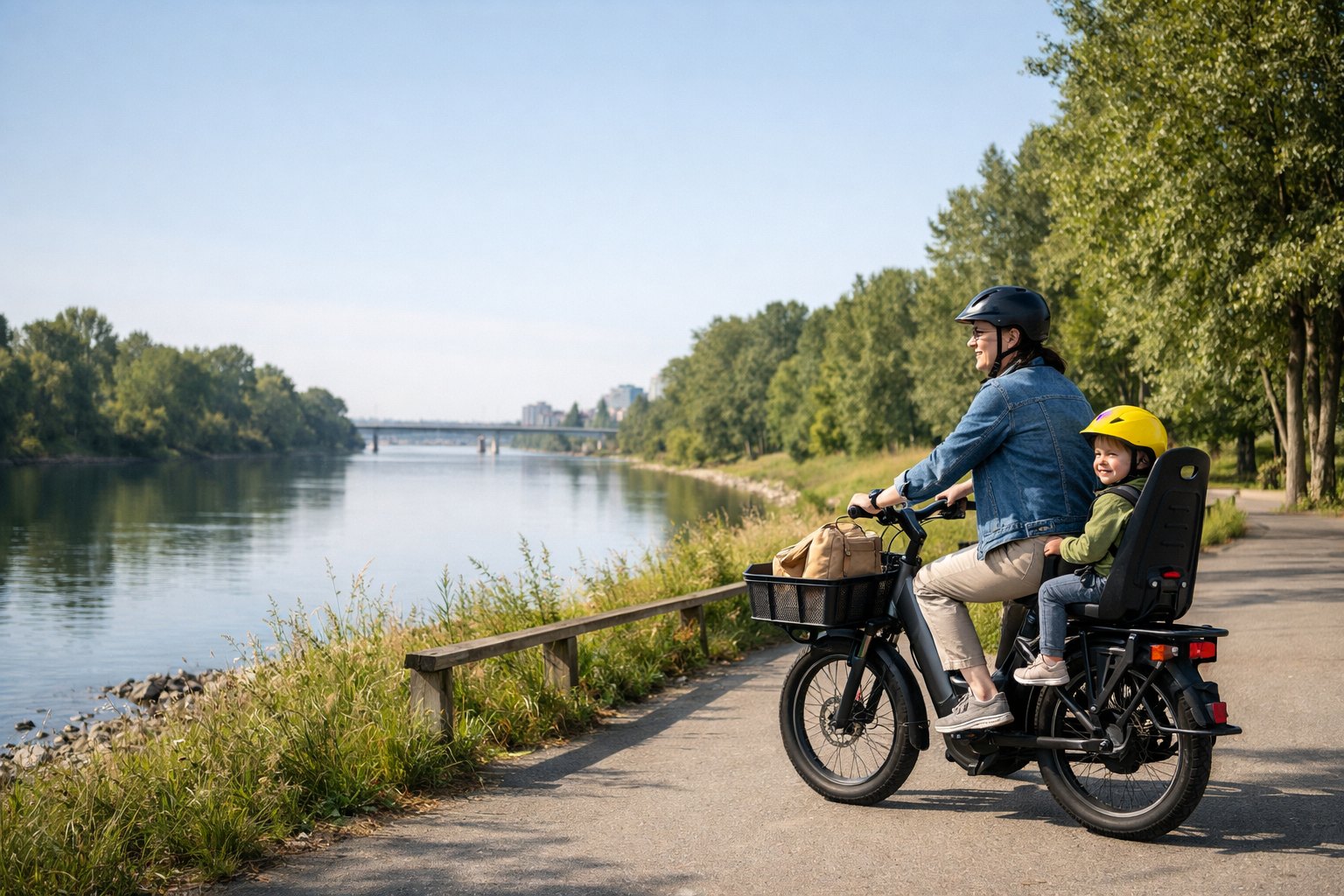
Riders using a practical e-bike setup on a real mixed-use corridor.
Check the bike, battery, support, and route before you buy.

What this guide covers

The legal answer changes when the behavior changes

Riders often focus on the original sticker or sales description, but route managers and enforcement questions usually turn on what the bike actually does now. That means top assisted speed, throttle behavior, and the general look and feel of the machine matter once the bike is on the path.

Throttle questions are often really route questions

A throttle by itself is not the whole story. The real issue is whether the bike still behaves like the type of e-bike that the state or route operator had in mind for that space.

  • Some routes are already cautious about class 3 or throttle-heavy use.
  • A faster or more aggressive tune can make a shared path answer much worse even if the rider still thinks of the bike as an e-bike.
  • Where the bike rides is often the deciding detail, not just what part was changed.

Battery and charger mods deserve extra caution

CPSC's current micromobility guidance is very clear that modified or reworked battery packs are a real safety issue. Riders looking for more range or more power should treat that as a battery-safety decision, not just a performance upgrade.

The smarter mod workflow

If a rider wants to change the bike, the safer order is route first, legal fit second, battery and charging quality third, and only then the fun or performance upgrade question.

Related state pages

Open the exact state pages behind this guide

These state pages carry the official sources and local caveats the guide points readers toward.

CA
Last checkedApril 18, 2026

California e-bike laws

If the bike really fits Vehicle Code 312.5, California recognizes it as a class 1, 2, or 3 e-bike. But local trail agencies, State Parks, and city rules can still narrow where it can ride, and machines pushed beyond the legal definition can fall into moped, motorcycle, or off-highway rules instead.

Class framework
Vehicle Code 312.5 sets a 750-watt ceiling and defines class 1, 2, and 3. Class 3 is pedal-assist up to 28 mph and must have a speedometer.
Trail access
Local agencies and State Parks may prohibit e-bikes or specific classes on trails under Vehicle Code 21207.5.
Open state page
FL
Last checkedApril 18, 2026

Florida e-bike laws

Florida generally treats an e-bike and its rider like a bicycle and bicycle rider. That means no state registration or driver-license burden for a standard e-bike, but it does not mean every sidewalk, beach, or path is automatically open.

Class framework
Florida requires a permanent e-bike label showing class, top assisted speed, and motor wattage.
Trail access
Cities, counties, and state agencies may restrict or prohibit e-bikes on bicycle paths, multiuse paths, trail networks, beaches, and dunes.
Open state page
NY
Last checkedApril 18, 2026

New York e-bike laws

New York allows e-bikes on some streets and highways with posted speed limits of 30 mph or less, does not register them, and lets municipalities control time, place, and manner of operation. That means the state answer is real, but it is not the whole answer.

Class framework
New York DMV defines class 1 and 2 statewide. The class 3 category is a 25 mph class tied to a city with a population of one million or more.
Trail access
DEC allows e-bikes on public roads it manages unless posted otherwise, but off-road use is generally prohibited except in limited designated settings.
Open state page
TX
Last checkedApril 18, 2026

Texas e-bike laws

Texas law defines class 1, 2, and 3 e-bikes, treats them under bicycle rules in many settings, and keeps class 3 out of the hands of riders under 15. But the state still lets local authorities manage some path, sidewalk, and traffic rules.

Class framework
Chapter 664 defines class 1, 2, and 3 and caps standard e-bikes at 750 watts and 28 mph.
Trail access
State or local authorities may not prohibit e-bikes where regular bicycles are allowed unless the area is a natural-surface path not open to motor vehicles.
Open state page