Higher speeds
E-bikes often cruise between 20 and 28 mph, so visibility, helmet coverage, and stopping distance matter more.
Gear guide
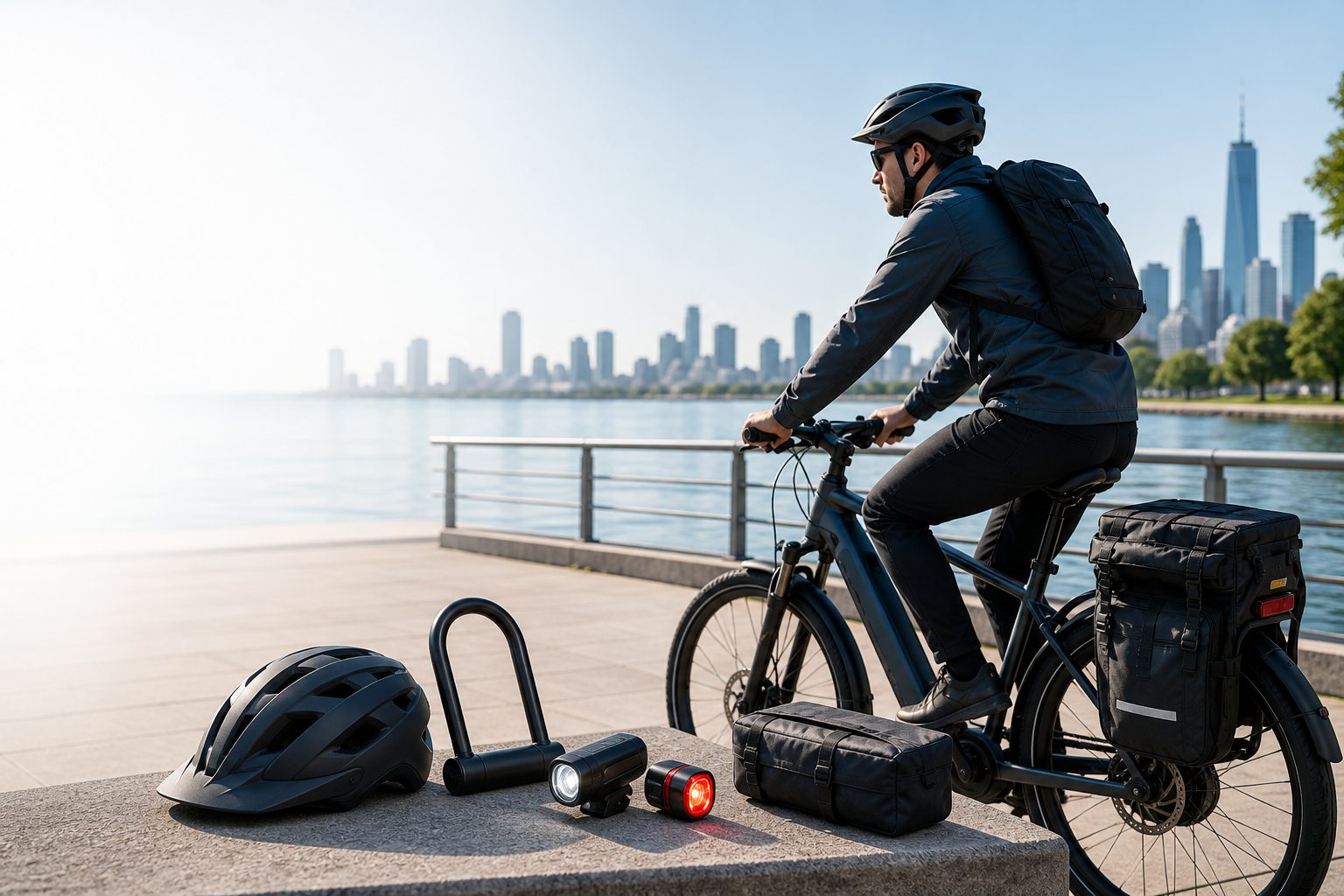
E-bikes are faster, heavier, and go farther than traditional bikes. Standard cycling gear will not always cut it. Start with the category, then compare only the picks that have cleared the safety, fit, and service checks.
Start with the checklistWhy e-bike gear is different
E-bikes blend bicycle handling with motor-assisted speed and everyday cargo. Your gear has to match the way the bike is actually used.
E-bikes often cruise between 20 and 28 mph, so visibility, helmet coverage, and stopping distance matter more.
A heavier frame, battery, cargo, and passenger setup needs gear that stays secure under real load.
More miles means more time in traffic, changing weather, mixed paths, and low-light conditions.
Helmets
E-bike speeds make fit, coverage, ventilation, and visibility more important than style alone.
Locks
E-bikes are valuable and in demand. A cafe lock is not enough for daily stops.
Lights
Faster riding and lower-light conditions mean you need to spot hazards sooner and be obvious earlier.
Racks & Storage
E-bikes turn errands into real transportation when racks and bags are matched to the load.
Batteries
Replacement batteries and chargers need exact voltage, connector, mount, and brand compatibility.
Parts & Service
Wear items, tools, tires, pads, and protective pieces matter more once the bike becomes transportation.