Maintenance guide

E-bike maintenance and pre-ride checklist

A practical maintenance guide for tire pressure, brakes, bolts, chain care, charging habits, and the quick checks that keep everyday e-bike riding from turning into a roadside problem.

Last checkedApril 19, 2026
Fast answer
Start hereA short pre-ride check beats a long repair day.

Most riders do not need a full workshop every week. They need a repeatable pre-ride scan for brakes, tires, battery, lights, and anything that sounds or feels different from the last ride. E-bikes are heavier, faster, and harder on parts than many standard bicycles, so small issues get expensive faster.

  • Check tire pressure, brake feel, and wheel security before the ride, not after something rubs or slips.
  • Watch charging habits, replacement chargers, and battery condition just as closely as the drivetrain.
  • A heavier utility or cargo setup needs faster attention to pads, rotors, bolts, and spokes.
  • If a sound, wobble, or braking issue is new, treat that as the maintenance signal instead of squeezing in one more ride.
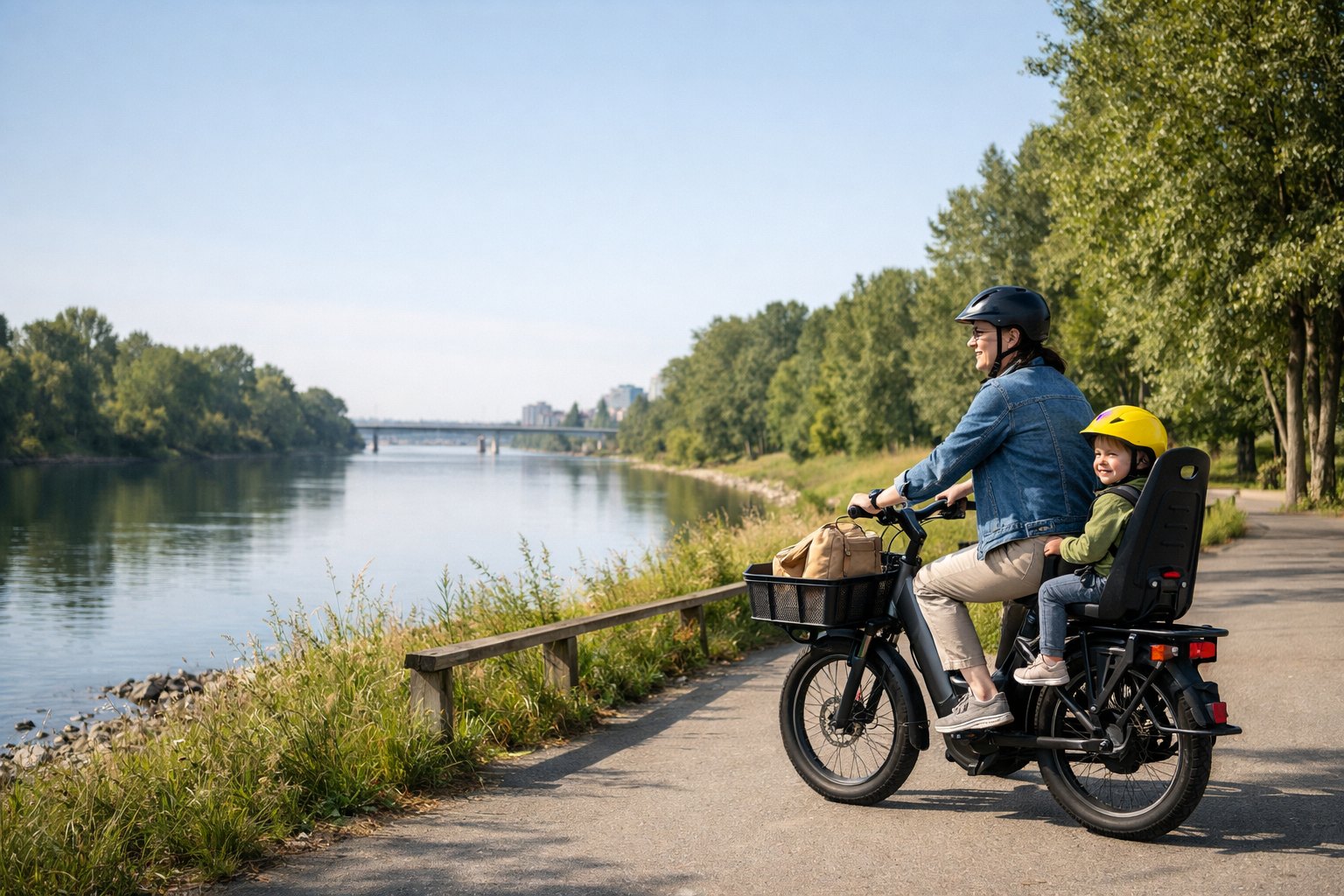
Riders using a practical e-bike setup on a real mixed-use corridor.
Check the bike, battery, support, and route before you buy.

What this guide covers

The five-minute pre-ride check

Look at the tires, squeeze the brakes, confirm the battery is seated, spin each wheel, and make sure the lights and display behave normally. The goal is not perfection. It is catching the obvious problem before speed, traffic, or cargo load make it bigger.

Battery and charging habits matter more than riders think

Charging safety is part of maintenance now. Use the supplied or approved charger, keep charging out of sleeping hours when possible, and do not ignore swelling, heat, or damaged battery housings.

  • Do not use modified or repurposed battery packs from unknown sources.
  • Unplug when charging is complete and keep flammables away from the charging area.
  • If the pack or charger gets unusually hot, stop and figure out why before the next charge.

Heavier e-bikes wear parts faster

Cargo bikes, throttle-heavy bikes, and everyday commuters put real load through pads, tires, chains, and fasteners. If the bike carries kids, pets, groceries, or hill miles, move brake and tire checks to the top of the list.

When to stop riding and get help

Grinding brakes, loose cranks, tire sidewall damage, steering play, or any battery or charging irregularity deserve a pause. A short shop visit is usually cheaper than a crash, a ruined wheel, or a damaged battery system.

Related state pages

Open the exact state pages behind this guide

These state pages carry the official sources and local caveats the guide points readers toward.

FL
Last checkedApril 18, 2026

Florida e-bike laws

Florida generally treats an e-bike and its rider like a bicycle and bicycle rider. That means no state registration or driver-license burden for a standard e-bike, but it does not mean every sidewalk, beach, or path is automatically open.

Class framework
Florida requires a permanent e-bike label showing class, top assisted speed, and motor wattage.
Trail access
Cities, counties, and state agencies may restrict or prohibit e-bikes on bicycle paths, multiuse paths, trail networks, beaches, and dunes.
Open state page
CA
Last checkedApril 18, 2026

California e-bike laws

If the bike really fits Vehicle Code 312.5, California recognizes it as a class 1, 2, or 3 e-bike. But local trail agencies, State Parks, and city rules can still narrow where it can ride, and machines pushed beyond the legal definition can fall into moped, motorcycle, or off-highway rules instead.

Class framework
Vehicle Code 312.5 sets a 750-watt ceiling and defines class 1, 2, and 3. Class 3 is pedal-assist up to 28 mph and must have a speedometer.
Trail access
Local agencies and State Parks may prohibit e-bikes or specific classes on trails under Vehicle Code 21207.5.
Open state page
NY
Last checkedApril 18, 2026

New York e-bike laws

New York allows e-bikes on some streets and highways with posted speed limits of 30 mph or less, does not register them, and lets municipalities control time, place, and manner of operation. That means the state answer is real, but it is not the whole answer.

Class framework
New York DMV defines class 1 and 2 statewide. The class 3 category is a 25 mph class tied to a city with a population of one million or more.
Trail access
DEC allows e-bikes on public roads it manages unless posted otherwise, but off-road use is generally prohibited except in limited designated settings.
Open state page
CO
Last checkedApril 18, 2026

Colorado e-bike laws

Colorado uses the standard three-class system, exempts e-bikes from registration and licensing, allows class 1 and 2 on the same bicycle and pedestrian paths as regular bikes unless restricted, and keeps class 3 more limited.

Class framework
Colorado uses the standard class 1, 2, and 3 system and requires a visible label with class, top assisted speed, and wattage.
Trail access
Unless otherwise restricted, class 1 and 2 may use the same bicycle and pedestrian paths as regular bikes. Class 3 may not unless the path is within a street or highway or the local jurisdiction permits it.
Open state page